


- Piezo Power transducer
- 3 T MRI, magnet in place
- Rechargeable, up to 30 hours
What is the Osia System?
The Osia System has two parts. A sound processor is worn just off the ear, held in place by a magnet. The OSI300 Implant sits fully under the skin, fixed to a small titanium BI300 Implant in the bone behind the ear. Nothing passes through the skin.
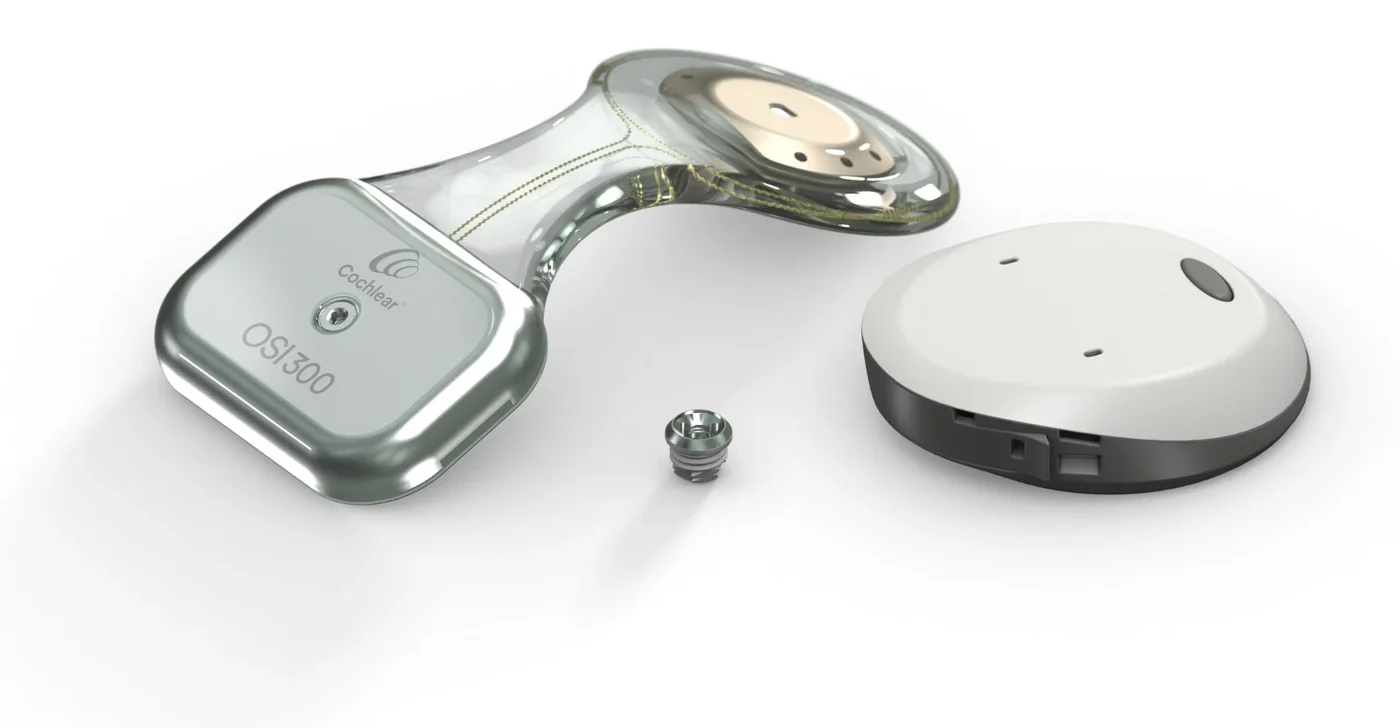
How does the Osia System work?
The Osia System sends sound through the bone to the inner ear, going around the ear canal and middle ear.
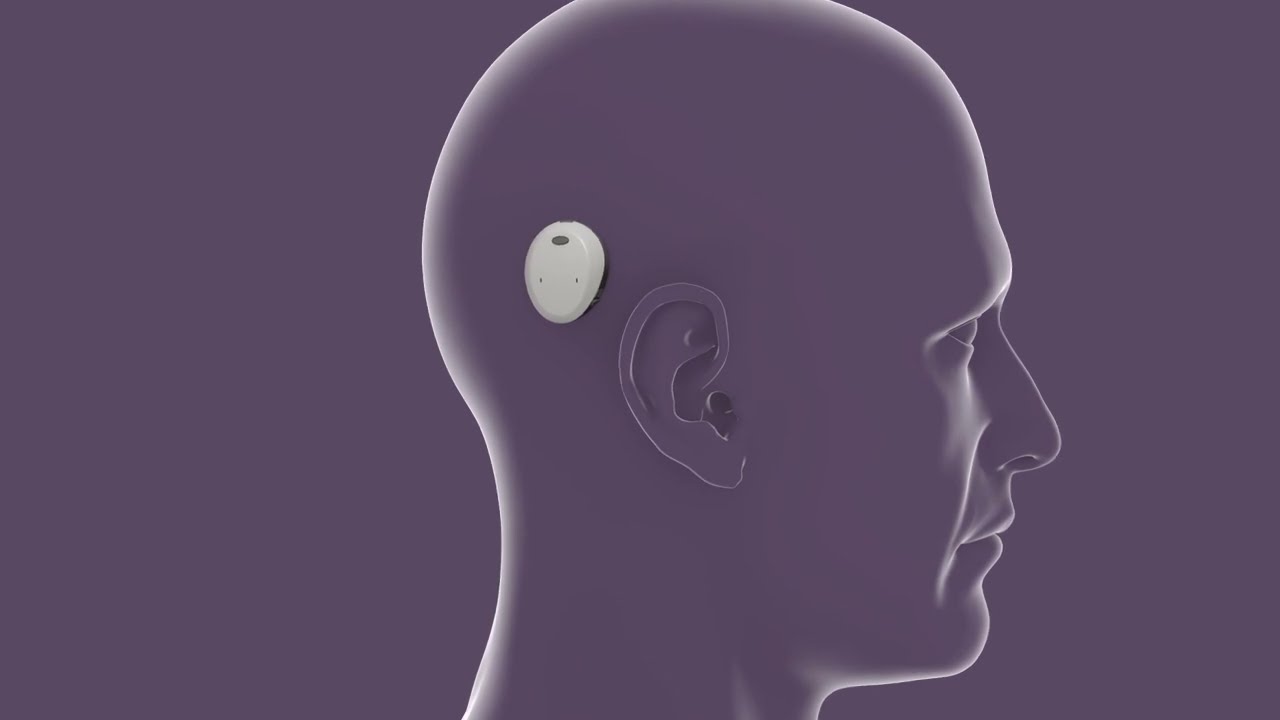
- The sound processor, worn just off the ear, picks up sound.
- It sends the sound through the skin to the implant, which sits fully under the skin.
- The implant's Piezo Power transducer turns the sound into vibrations, which you cannot feel, and passes them into the bone.
- The vibrations travel through the bone to the inner ear, which sends them to the brain as sound.
Sound goes around the ear canal, so the ear canal is left open. The surgery does not touch the middle or inner ear.
Who is the Osia System for?
The Osia System is for adults and children from 5 years old with conductive hearing loss, mixed hearing loss, or deafness in one ear (single-sided deafness). With the Osia 3 Sound Processor it can be fitted for bone conduction hearing levels up to 65 dB.
Common causes of these kinds of hearing loss include:
- An ear canal that has not formed, or a small or missing outer ear (atresia and microtia).
- Long-term ear infections or draining ears (chronic otitis media).
- Otosclerosis and cholesteatoma.
- Complete deafness in one ear, with normal hearing in the other.
It can also help people who find hearing aids uncomfortable, or who get ear infections or itching from wearing them. Only a hearing test can tell whether Osia is right for you or your child, and the test is free at our Cochlear Care Centres.
Is Osia a BAHA, or a cochlear implant?
Osia is a bone conduction implant. Many ENT surgeons in Sri Lanka call any bone conduction implant a BAHA, short for bone anchored hearing aid. Like a BAHA, Osia is anchored to the bone, but it creates its sound vibrations inside the implant, under the skin, with a piezoelectric transducer.
Osia is not a cochlear implant. A cochlear implant is for severe or profound hearing loss, where the inner ear itself is damaged. Osia is for hearing loss where sound cannot travel properly through the outer or middle ear, or where one ear is deaf and the other hears well.
Can you try bone conduction before surgery?
Yes. Baha Start lets you hear through bone conduction with no surgery at all. A Baha 6 Max Sound Processor is worn on a soft headband, the Baha SoundBand (previously called the Softband), or on a SoundArc. You can try it free at our Cochlear Care Centres.

Baha Start for babies and young children
Babies can start hearing through bone conduction within weeks of birth, long before they are old enough for an implant. Albin, whose story is below, was fitted with Baha Start at two weeks old. Many children use Baha Start until they are ready for an Osia implant.
The Baha SoundBand is designed for babies and young children, and adults can wear it for a home trial. The SoundArc sits around the back of the head, a more discreet option for older children and adults. Both are free from latex.
The Baha 6 Max weighs 11.5 g, is IP68 dust and water resistant, has dual microphones, and streams directly from Apple and Android phones.
| Baha Start | Osia System | |
|---|---|---|
| Surgery | None | A short operation, often home the same day |
| How it is worn | Baha 6 Max Sound Processor on a soft band or SoundArc | Osia 3 Sound Processor, held on by a magnet |
| Who it suits | Babies, children and adults, and anyone trying bone conduction first | Adults and children from 5 years old |
| How sound reaches the bone | Through the skin, from the band | Directly into the bone, from the implant |
A soft band is a good first step, but an implant usually hears better. Research comparing a bone conduction implant with a soft band found the implant gave children a higher-quality sound signal, better recognition of familiar words, and faster learning of new words.
The Osia 3 Sound Processor
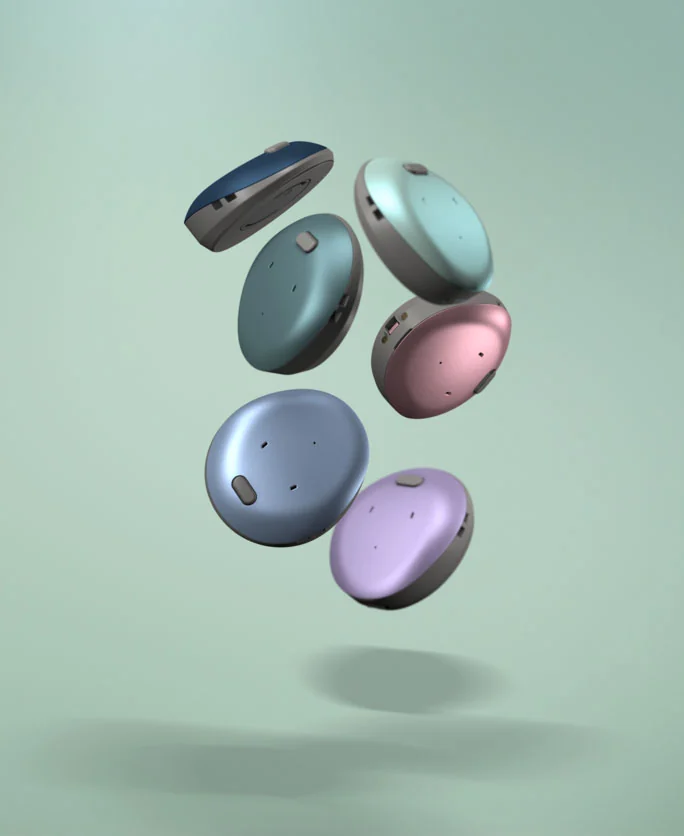
The newest Osia sound processor, released in 2026
- Fully rechargeable, with up to 30 hours of hearing on a charge. Fifteen minutes of charging gives up to two hours.
- IP68 dust and water resistant.
- Streams directly from Apple and Android phones, Bluetooth LE Audio and Auracast broadcast audio.
- SmartSound iQ and ForwardFocus help you follow speech in background noise.
- Eleven colour covers to choose from.
The OSI300 Implant
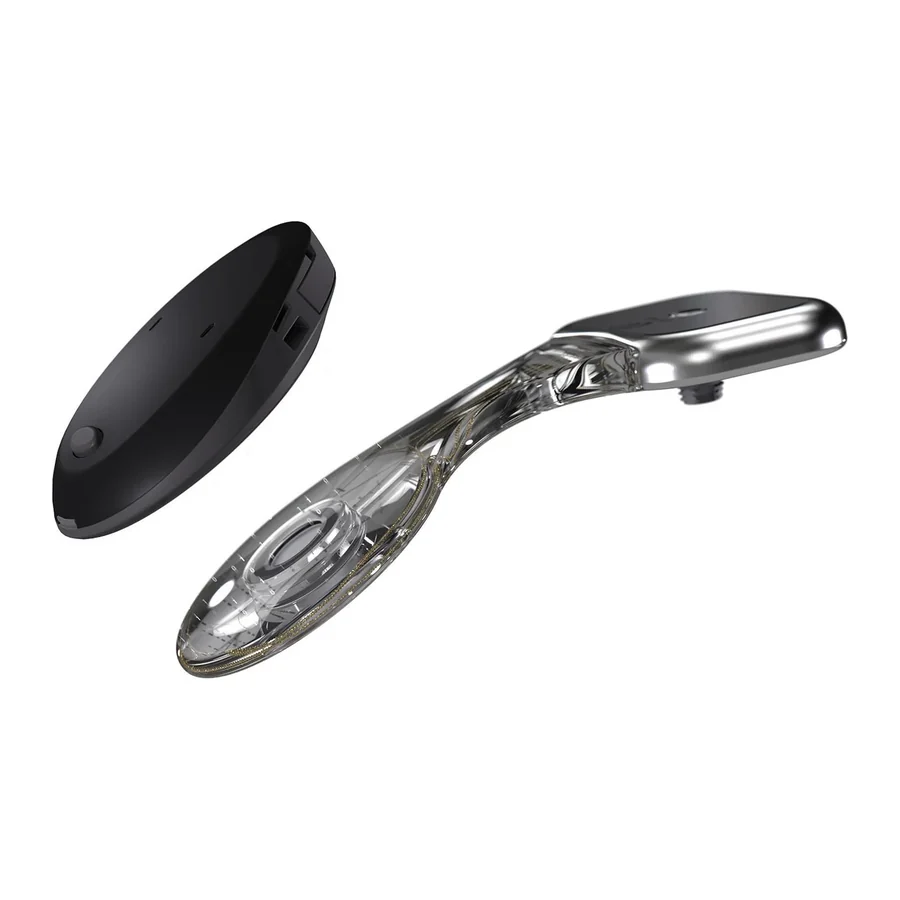
- 1.5 T and 3 T MRI with the magnet in place. No head wrap, and no surgery to remove the magnet.
- Cochlear describes it as the thinnest active bone conduction implant available.
- 99.76% reliability within two years, across 8,314 implants registered by December 2025.
- The operation can take as little as 30 minutes, and most people go home the same day.
Osia surgery in Sri Lanka is performed by the Cochlear-trained surgeons we recommend, with our audiologists with you before, during and after the operation. Afterwards, our speech therapists can help children and adults learn to listen with it: see speech therapy and AVT.
Hear from Osia users

Albin: from Baha Start to Osia
Albin was born with microtia and atresia, which caused conductive hearing loss in both ears. He heard through Baha Start from two weeks old, and later moved to the Osia System. His first reaction: "I could hear new sounds I couldn't hear before."

Linda: an active, full life
Linda describes how the Osia System helps her hear speech in noisy places and lead an active and fulfilling life.


Osia documents
| Document | What it covers | Download |
|---|---|---|
| Osia System technical specification | OSI300 Implant dimensions, weight, materials and MRI | Osia tech specs (PDF, 0.4 MB) |
| Osia System datasheet | Fitting range and MRI image artefacts for the OSI300 Implant | Osia datasheet (PDF, 0.7 MB) |
| Osia reliability report | Implant reliability for the OSI300 and OSI200. Volume 6, December 2025 | Reliability report (PDF, 0.7 MB) |
| Osia System for children | Cochlear's guide for parents: how Osia works, the surgery, and Albin's story | Osia children's brochure (PDF, 3.6 MB) |
| Baha Start product sheet | The Baha SoundBand and SoundArc: who each is for, sizes and colours | Baha Start product sheet (PDF, 0.2 MB) |
| Baha 6 Max datasheet | The sound processor used for Baha Start: size, battery, water rating and streaming | Baha 6 Max datasheet (PDF, 2.0 MB) |
Sources:
- Cochlear Osia System
- Osia 3 Sound Processor
- OSI300 Implant
- Cochlear introduces the new Osia 3 Sound Processor, 13 July 2026
- Osia System cleared for children from 5 years old, 2024
- Cochlear Baha Start
- Bone conduction amplification in children: stimulation via a percutaneous abutment versus a transcutaneous softband, Ear and Hearing, 2019